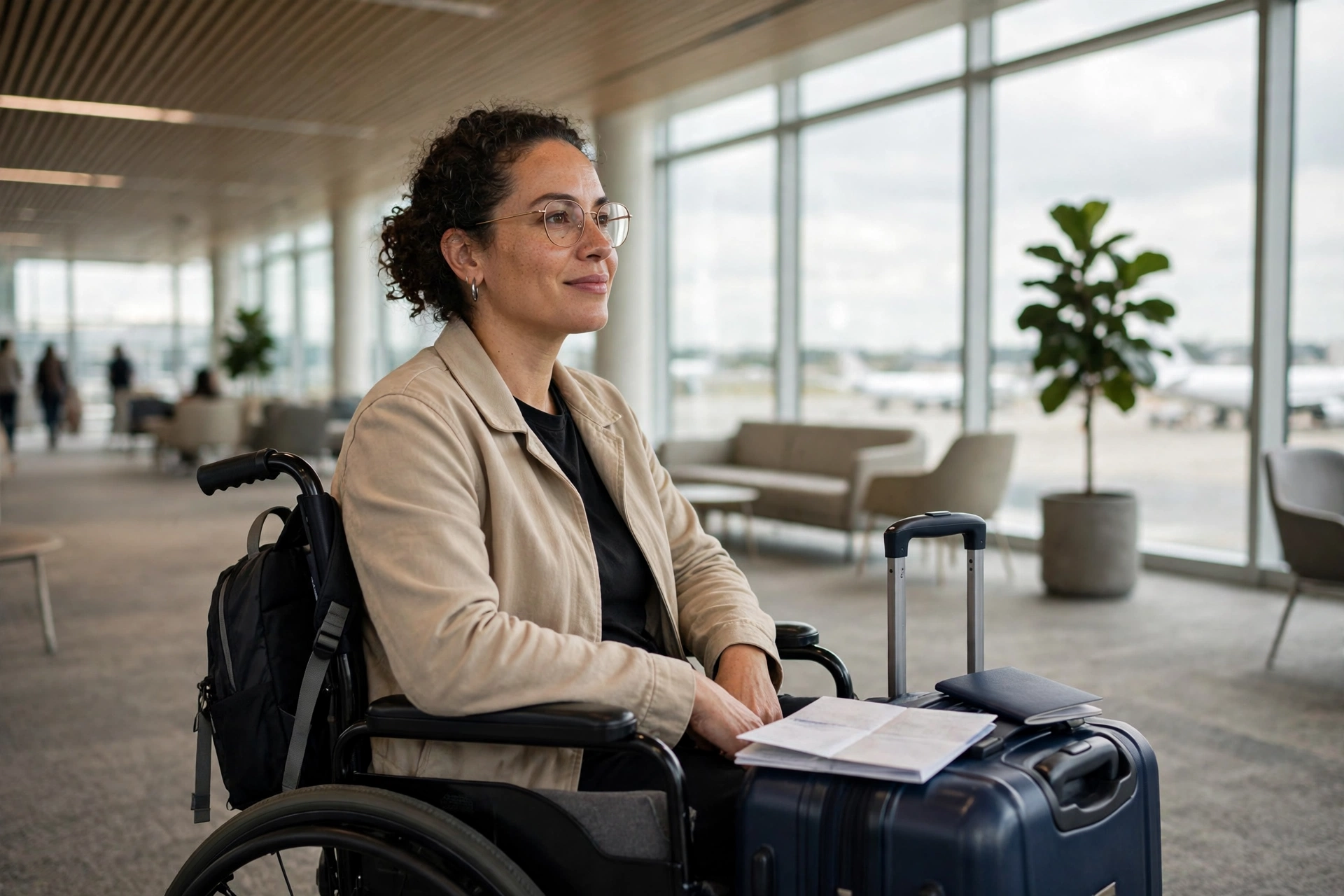
Buying travel insurance looks simple. You type in your dates and destination, pick a policy, and pay. For many travellers that is enough. But if you travel with a disability, a long term health condition, or mobility equipment, the policy that looks cheapest can leave the biggest risks uncovered. The difference between standard travel insurance and accessible travel insurance is not the brand on the paperwork. It is what the policy actually pays for when something goes wrong.
This guide compares the two side by side: where standard cover stops, what specialist cover adds, and how to choose without paying for cover you do not need. It is general guidance, not financial advice. Every policy wording is different, so the schedule of benefits for the policy you buy is always the final word.
The Short Answer: Who Needs Which Policy
If you have no pre-existing medical condition, use no mobility equipment, and travel without a carer, a standard policy is usually enough. It covers the usual risks: emergency medical treatment, cancellation, lost baggage, and delays. If any of those three things apply to you, a standard policy may still work, but only after you have declared everything and checked the small print. Accessible travel insurance is designed for travellers whose needs fall outside the standard template. It starts from the assumption that medical conditions, equipment, and support needs are part of the trip, not exceptions to it.
What Standard Travel Insurance Covers
A standard policy is built around the average traveller. It normally covers emergency medical treatment abroad, medical repatriation, trip cancellation and curtailment, lost or delayed baggage, and travel delay. Our guide to what travel insurance actually covers explains each of these in detail. The cover is real, and for a straightforward holiday it is usually all you need.
The limits are where the trouble starts. A standard policy typically treats a disability or long term condition as a pre-existing medical condition. If you do not declare it, claims linked to it can be refused. If you do declare it, the insurer may add an extra premium, apply an exclusion, or decline to cover that condition at all. Mobility equipment is usually treated as ordinary baggage, with a single item limit far below the cost of a powered wheelchair. A carer travelling with you is usually treated as an ordinary second traveller, with no cover for replacing them if they fall ill.
What Accessible Travel Insurance Means
Accessible travel insurance is not a separate legal category. It is the name used for specialist policies designed for disabled travellers and people with pre-existing medical conditions. Instead of screening your condition out, the insurer screens it in. Medical screening is part of the quote, and the price reflects the conditions you declare. The policy is built to cover the costs that standard policies usually leave out.
That usually means four things: cover for declared pre-existing conditions, including emergency treatment linked to them; cover for mobility equipment, including repair, replacement, and hire of a temporary replacement; cover for a travelling carer or companion, including the cost of a replacement carer; and cover for lost or damaged medication and the cost of getting essential supplies replaced abroad. Not every specialist policy includes all four, so the wording still needs checking.
The Differences at a Glance
| What happens | Standard travel insurance | Accessible travel insurance |
|---|---|---|
| Pre-existing medical conditions | Covered only if declared, often excluded or loaded with an extra premium | Covered after medical screening, priced for the conditions declared |
| Mobility equipment | Treated as baggage, with a low single item limit | Named cover for repair, replacement, and hire of a temporary replacement |
| Carer or companion | No specific cover beyond an ordinary second traveller | Replacement carer costs can be covered |
| Medication | Limited or excluded | Lost medication and replacement costs often covered |
| Medical repatriation | Usually included | Usually included, often with higher limits |
| Cancellation | Usually included | Usually included, and can cover a carer falling ill |
| Price | Lower for a straightforward trip | Higher, because it reflects declared conditions and equipment |
| Buying process | Quick online quote, few health questions | Medical screening questions, sometimes a phone call |
Pre-Existing Conditions and Medical Screening
This is the single biggest difference, and the one that causes most refused claims. A pre-existing condition is any illness, injury, or condition you have been diagnosed with, treated for, or investigated for, usually within the last two years, plus serious conditions such as cancer, heart, or respiratory conditions however long ago they were diagnosed. MoneyHelper uses that two year definition, and most insurers work to something similar.
A standard quote asks a few health questions and often assumes the answer is no. If you answer yes, the quote may jump, exclude the condition, or stop altogether. A specialist quote asks more questions, because it needs to understand the condition before it can price it. That takes longer, sometimes a phone call instead of a five minute form, but the result is a policy that actually covers the condition you declared. The most expensive mistake is to leave a condition undeclared to keep the price down. If you need treatment for that condition abroad, the insurer can refuse the claim, and the bill is yours.
If a mainstream insurer refuses you cover, cancels your policy, applies an exclusion you cannot remove, or quotes a high extra premium because of your condition, it must point you to the MoneyHelper travel insurance directory. The directory lists firms that specialise in cover for serious medical conditions, and it is free to use.
Mobility Equipment Cover: The Gap That Matters Most
For wheelchair users, this is where a standard policy most often fails. A powered wheelchair can cost several thousand pounds, and a standard baggage limit, often a few hundred pounds per item, does not come close. Damage in transit is a real risk, and repair abroad can be slow and expensive. Our guide to mobility equipment cover explains what to check, including whether the policy pays for repair, replacement, or hire of a temporary chair while yours is fixed.
Specialist policies usually name mobility equipment separately, with a higher limit and cover for repair, replacement, and hire. Some also cover getting the equipment home if it cannot be repaired where you are. Check three details: the single item limit for equipment, whether hire of a replacement is included, and whether damage by the airline is covered or left to the airline’s own liability. Airlines have their own duties when they damage a wheelchair, and our practical guide to flying with a wheelchair explains assistance, batteries, and damage rights, but the airline process can take time, and insurance can fill the gap.
Carers, Companions and Extra Support
If you travel with a carer or personal assistant, your trip depends on them as much as on your own health. A standard policy covers them as a fellow traveller, nothing more. If they fall ill, or a family emergency calls them home, a standard policy will not pay for a replacement carer to fly out, and your holiday may have to end early.
Some specialist policies cover the cost of a replacement carer, or the extra cost of cutting the trip short if your carer cannot continue. Ask the insurer directly whether this is included, and whether the carer needs to be named on the policy. The same applies to a companion who provides essential support but is not a paid carer. Get the answer in writing before you buy. Our guide to planning holidays abroad covers the practical steps of travelling with support, and our wheelchair accessible holidays guide covers accessible trips closer to home.
What Neither Policy Replaces: The GHIC
One confusion causes more trouble than any other. A UK Global Health Insurance Card, the GHIC, is not travel insurance, and neither a standard nor a specialist policy replaces it. The card gives you access to medically necessary state healthcare in the European Economic Area and Switzerland on the same terms as a local resident. That can cut the cost of emergency state treatment, and it covers routine care for a long term condition if you arrange it in advance.
But the card does not pay for medical repatriation, private hospital treatment, mountain or ski rescue, cancellation, or lost baggage. The NHS is clear: a GHIC is not a replacement for travel and medical insurance. Our comparison of the GHIC card vs travel insurance sets out what each one actually covers. For a trip in Europe, the sensible combination is both: the GHIC for state care, and a travel insurance policy for everything the card leaves out. The NHS page on applying for a GHIC explains how to get the card free through the official service.
How Much More Does Accessible Cover Cost?
Specialist cover usually costs more than a standard policy, because the insurer is taking on more risk. How much more depends on the conditions declared, the destination, the length of the trip, and the equipment covered. A well controlled condition may add only a small amount, while a serious or unstable condition, or a trip to a country with high medical costs such as the United States, can add far more.
Price is not the only comparison. A cheaper policy that excludes your condition is not cheaper cover, it is no cover for the risk most likely to affect you. Compare policies on the same basis: the same declared conditions, equipment limit, excess, and cancellation limit. Get at least two quotes, one standard and one specialist, so the difference is visible instead of guessed. Buy as soon as you book, because cancellation cover only starts when the policy starts.
How to Choose: Five Questions Before You Buy
Work through these five questions with any policy you are considering, standard or specialist, and keep the answers with the policy documents.
- Have I declared every condition, including ones that feel minor or well controlled?
- Does the equipment limit cover the full replacement cost of my wheelchair or scooter?
- Is my carer covered, and is a replacement carer included if they cannot continue?
- What is the excess on medical cover, and what is the excess on equipment cover?
- Does the policy cover the country, the activities, and the length of trip I have booked?
If a policy fails any of these questions, it is the wrong policy for your trip, however cheap it looks. Our guide on how to book an accessible hotel room sets out the questions to ask before you book a room.
Where to Find Specialist Cover If Standard Insurers Say No
Start with a standard quote and declare everything. If the quote excludes your condition, or the extra premium looks wrong, do not simply accept it. Use the MoneyHelper travel insurance directory, which lists firms that specialise in cover for serious medical conditions. It is free, and it is the directory insurers must point you to when they cannot offer suitable cover.
Specialist brokers can also help, and disability organisations often keep lists of insurers other travellers have used. Whatever route you take, read the schedule of benefits before you pay, and keep a copy of the policy and the emergency number with you while you travel. A clear answer before you travel is worth far more than a dispute after a claim.
Frequently Asked Questions
Can I get travel insurance if I have a disability?
Yes. Many people with disabilities are covered by standard policies once conditions are declared, and specialist policies exist for cases standard insurers will not cover. If one insurer refuses you, try the MoneyHelper directory before assuming no cover is available.
Does standard travel insurance cover a wheelchair?
Usually only as baggage, with a low single item limit. That rarely covers repair or replacement of a powered wheelchair. Specialist cover names equipment separately, with higher limits and hire of a replacement. Check the single item limit and the excess before you buy.
Do I still need travel insurance if I have a GHIC?
Yes. A GHIC covers medically necessary state healthcare in the EEA and Switzerland, but it does not cover repatriation, private treatment, cancellation, or baggage. You need both for a European trip.
Will declaring a condition always make my policy more expensive?
Not always. A stable, well controlled condition may add little or nothing. An unstable or serious condition usually adds cost. Either way, declaring is cheaper than an unpaid claim for an undeclared condition.
The choice is not really between two types of insurance. It is between a policy that covers your actual trip and one that covers a trip you are not taking. If your health, your equipment, or your carer shapes how you travel, your insurance should reflect that. Compare the wording, not just the price, declare everything, and buy early.