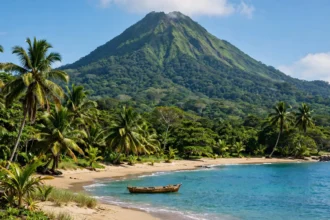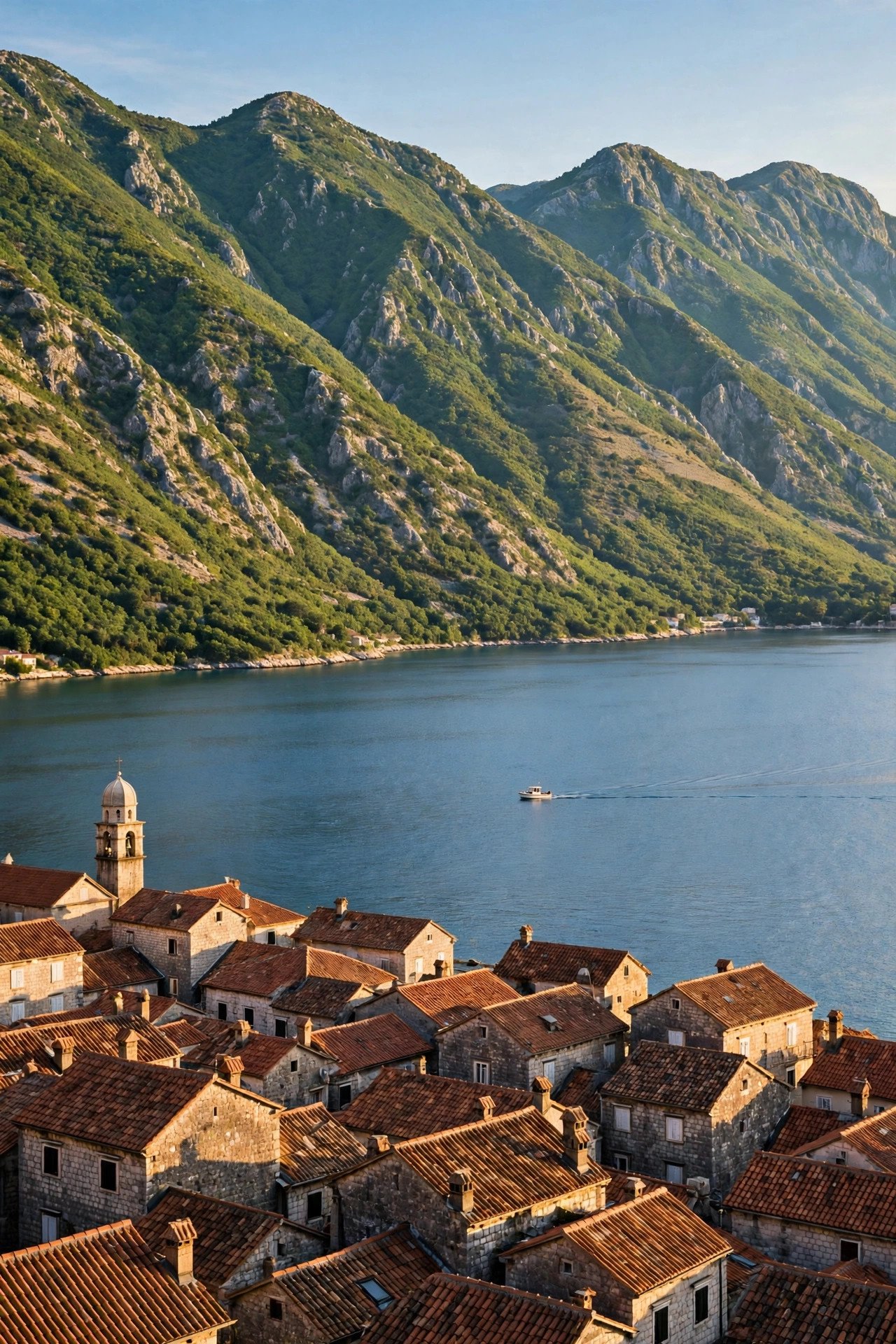
Montenegro packs a lot into a small country: the walls of Kotor, the beaches of Budva, and the mountains around Durmitor. Prices on the coast in July and August now sit close to western Europe for rooms and restaurants, while bakeries, buses and national park tickets stay cheap. This breakdown uses 2026 prices from travel guides and official sources.
How Much Does a Week in Montenegro Cost?
For one person, a week in Montenegro excluding flights runs about 315 to 490 euros on a tight budget, 665 to 1,050 euros at mid-range, and 1,260 to 1,960 euros or more for comfort travel. Return flights from London add roughly 150 to 250 euros on a low-cost carrier booked early, 250 to 400 euros at mid-range, and 400 to 700 euros or more in peak summer. Room prices assume two people sharing.
| Style | Per day, excluding flights | 7 days, excluding flights | Return flights from the UK | Week total per person |
|---|---|---|---|---|
| Budget | 45 to 70 euros | 315 to 490 euros | 150 to 250 euros | 465 to 740 euros |
| Mid-range | 90 to 150 euros | 665 to 1,050 euros | 250 to 400 euros | 915 to 1,450 euros |
| Comfort | 180 to 280 euros or more | 1,260 to 1,960 euros or more | 400 to 700 euros or more | 1,660 to 2,660 euros or more |
The biggest single choice is where you sleep. A hostel bed and a four-star hotel on the same night in Kotor can sit 100 euros apart, and that gap sets the tone for the whole trip.
Flights From the UK: What to Expect to Pay
Flying is the easy way in, and summer 2026 brought the best choice of direct routes yet. British Airways flies Heathrow to Tivat three times a week, from 14 May to 26 September 2026. easyJet, Jet2 and TUI fly to Tivat from London, Manchester, Birmingham, Bristol, Newcastle and Glasgow, while Ryanair flies Stansted to Podgorica and Wizz Air flies Gatwick to Podgorica. The flight takes about three hours from London. Tivat suits the coast, while Podgorica suits Lake Skadar and the north.
Fares move a lot with the date. The average return from London over the year sits near 130 pounds, according to fare tracking, while peak August returns cost far more. Book four to six months ahead, fly midweek, and add checked luggage before you compare airlines, since budget fares cover only a small under-seat bag. In winter the direct routes thin out, and Podgorica keeps the year-round links, usually with a connection through Belgrade or Istanbul.
Where to Stay: Hotels, Apartments and Hostels
Rooms are the largest cost on most Montenegro trips, and the season matters more than the town. A hostel bed costs around 20 euros a night in summer and about half that out of season. A private apartment in Budva, Kotor or Herceg Novi runs 60 to 120 euros a night in July and August, and 20 to 30 euros in May and June for smaller places a short walk from the beach.
Four-star hotels cost about 44 euros per person per night in May and October, 59 to 67 euros in June and September, and up to 84 euros in July and August, according to 2026 agency catalogues. A hotel with breakfast or half board at the height of summer runs 65 to 130 euros per person per day. Staying just outside the old town walls, in Dobrota beside Kotor for example, often cuts the room price sharply. Book early for July and August, and note that a self-catering apartment saves more than the room rate suggests.
Food and Drink: Eating Well Without Overspending
Food is where Montenegro still feels good value, as long as you eat where locals eat. A coffee on the coast costs 2 to 4 euros in summer, and a half-litre beer in a bar runs 1.50 to 4 euros. Fast food such as burek, pljeskavica or a slice of pizza costs 3 to 6 euros. A meal in a simple restaurant is 6 to 17 euros, and lunch with a salad and a drink on the coast runs 15 to 25 euros per person. A three-course dinner for two at a mid-range restaurant costs 28 to 80 euros. Budget 15 to 25 euros a day for food on a tight budget, 30 to 50 euros at mid-range, and 55 to 90 euros or more if you eat out daily.
Supermarkets keep costs down: water costs 0.50 to 1.50 euros for 1.5 litres, a mid-range bottle of local wine 3.50 to 12 euros, a beer 0.70 to 1.50 euros and a loaf of bread 0.60 to 1.50 euros. Open-air markets, the pijaca, sell fresh produce below supermarket prices. The dearest tables sit on the waterfront in Kotor and Budva old towns, so walk one street back and the same grilled fish often costs a third less.
Getting Around: Buses, Car Hire and Ferries
Montenegro is small, and buses cover the coast well. A ticket from Kotor to Budva costs about 3 to 5 euros, and Budva to Podgorica runs 6 to 11 euros. Buses run often in summer and less often out of season, so check times the day before.
A car gives you freedom the buses cannot match, and it is close to essential for Durmitor and Lake Skadar. A small rental car costs from 15 euros a day out of season, 25 to 35 euros in May and September, and 45 to 70 euros from mid-July to the end of August, with automatics about a third more. Fuel is set weekly by the government: in early October 2026 Eurosuper 95 cost 1.77 euros a litre and diesel 1.96 euros. Tolls are small: the motorway costs 3.50 euros, the Sozina tunnel 2.50 euros, and the ferry 5 euros for a car. Parking on the coast costs 1 to 2 euros an hour or 10 to 15 euros a day. For a week split between coast and mountains, hire the car for three or four days instead of the full week.
Activities and Entry Fees: What the Sights Cost
Many of the best things in Montenegro cost nothing: walking the old towns of Kotor and Budva, hiking the hills above the bay, and swimming from the town beaches are all free. The paid sights are modest. Entry to Durmitor and Lake Skadar national parks costs 5 euros a day, and Biogradska Gora costs 4 euros. Climbing the Kotor fortress walls costs 15 euros, and Budva museums charge about 3 euros.
Beaches carry the one cost that catches people out. On organised beaches a set of two sunbeds and an umbrella costs mostly 15 to 30 euros in 2026, and about 20 euros at Jaz beach. At exclusive beach clubs a set can cost over 100 euros, and at Kraljeva plaza and Milocer it reached 200 to 240 euros in 2026. Bring a towel and use the free stretches of beach instead.
Money, Entry Rules and the Small Charges to Budget For
Montenegro uses the euro, even though it is not in the EU, so there is no currency to change. Cards are widely accepted in hotels, supermarkets and most restaurants on the coast, but carry cash for small cafes, markets, buses and places inland. When a card machine asks whether to pay in pounds or euros, always choose euros.
UK passport holders can visit without a visa for up to 90 days in any 180-day period. Your passport must have been issued less than 10 years before you arrive and stay valid for at least 3 months after you plan to leave. Montenegro is not part of the Schengen area, so days spent there do not count towards your Schengen allowance. ETIAS does not apply to Montenegro, and it has not launched anywhere. Check the FCDO travel advice for Montenegro before you travel.
Every visitor must register within 24 hours of arriving, which your hotel or host normally handles for you. Tourist tax runs about 1 euro per person per night in Kotor, Tivat, Herceg Novi and Ulcinj. If you carry 10,000 euros or more in cash, you must declare it on arrival. Montenegro recognises the GHIC, but you need a certificate from the local Health Insurance Fund for free or reduced-cost care, so travel insurance is still worth having. For a full rundown of current local prices, the 2026 Montenegro prices guide and the Montenegro trip cost breakdown are useful checks.
Frequently Asked Questions
Is Montenegro cheap for UK travellers?
It is cheaper than Croatia and much of western Europe, but it is not the bargain it once was. Expect 45 to 70 euros a day on a tight budget and 90 to 150 euros at mid-range, excluding flights.
How much money should I take for a week in Montenegro?
A mid-range week for one person runs about 665 to 1,050 euros on the ground, plus 250 to 400 euros for return flights. Carry cash in euros for buses, markets and small cafes.
Is Montenegro cheaper than Croatia?
Yes, by a clear margin. Traveller-reported spending puts Montenegro about 30 to 40 percent below equivalent Dalmatian coast prices in Croatia, while the scenery around the Bay of Kotor stands up well against the Croatian coast.
Do I need a visa for Montenegro?
No, not for a holiday of up to 90 days. UK passport holders enter visa-free for up to 90 days in any 180-day period, and those days do not count towards your Schengen allowance.
Can I pay by card in Montenegro?
Yes, in most places on the coast. Hotels, supermarkets and larger restaurants take Visa and Mastercard. Small cafes, markets, buses and rural guesthouses often take cash only, so keep euros on hand.
Putting It Together: A Realistic Mid-Range Week
Here is what a mid-range week looks like in practice, for one person sharing a room. Return flights from London cost about 230 euros. A private apartment at 70 euros a night comes to 245 euros per person for the week. Food at 40 euros a day adds 280 euros. Buses, three days of car hire and fuel come to about 175 euros. Activities and park tickets add around 60 euros, and tourist tax adds 7 euros. The total lands just under 1,000 euros per person, flights included, or roughly 870 pounds at typical card rates. May, June and September give the best balance of price and weather. Our Montenegro travel itinerary for 7 days from coast to mountains follows a similar route, and you can compare the trip with our Costa Rica trip cost breakdown and our Vietnam trip cost breakdown if you are still choosing a destination. Book the flights and the room early, eat in the konobas, and hire the car only for the mountain days.