Shetland sits closer to Norway than to mainland Scotland, and its food tells that story in every bite. These are islands where you are never more than a few miles from the sea, and where crofters still cure mutton the way their grandparents did. A food and drink trail here is not a checklist of fashionable restaurants. It is a journey through a working larder, from fish market and bakery to the most northerly distillery in the United Kingdom.
This route runs the length of the Shetland Mainland and hops north to Unst, the most northerly inhabited island in Britain. It follows the same spirit as our Isle of Skye Food and Drink Trail and the Arran Food and Drink Trail, but the flavours are entirely Shetland’s own: rope grown mussels, salt cured reestit mutton, golden bere bannocks and small batch gin flavoured with island apple mint. Allow at least four or five days, hire a car, and bring an appetite.
Getting to Shetland and Getting Around
Most visitors arrive the slow way, and the slow way is half the pleasure. NorthLink Ferries sails overnight from Aberdeen to Lerwick, so you can eat dinner on board, sleep in a cabin and wake up in Shetland’s capital as the ship ties up in the morning. Some sailings call at Orkney on the way north. If time is short, flights from mainland Scottish airports land at Sumburgh, at the southern tip of the Mainland, with bus and hire car connections north to Lerwick.
Once you are here, a hire car is close to essential for a food trip. The roads are good and quiet, but producers are spread along 70 miles of Mainland and across several islands. Reaching Unst means two short ferry crossings, first from Toft on the Mainland to Ulsta on Yell, then from Gutcher on Yell to Belmont on Unst. Both are turn up and go services for most of the year, although booking a car space ahead is wise in summer.
Lerwick: The Capital’s Tables
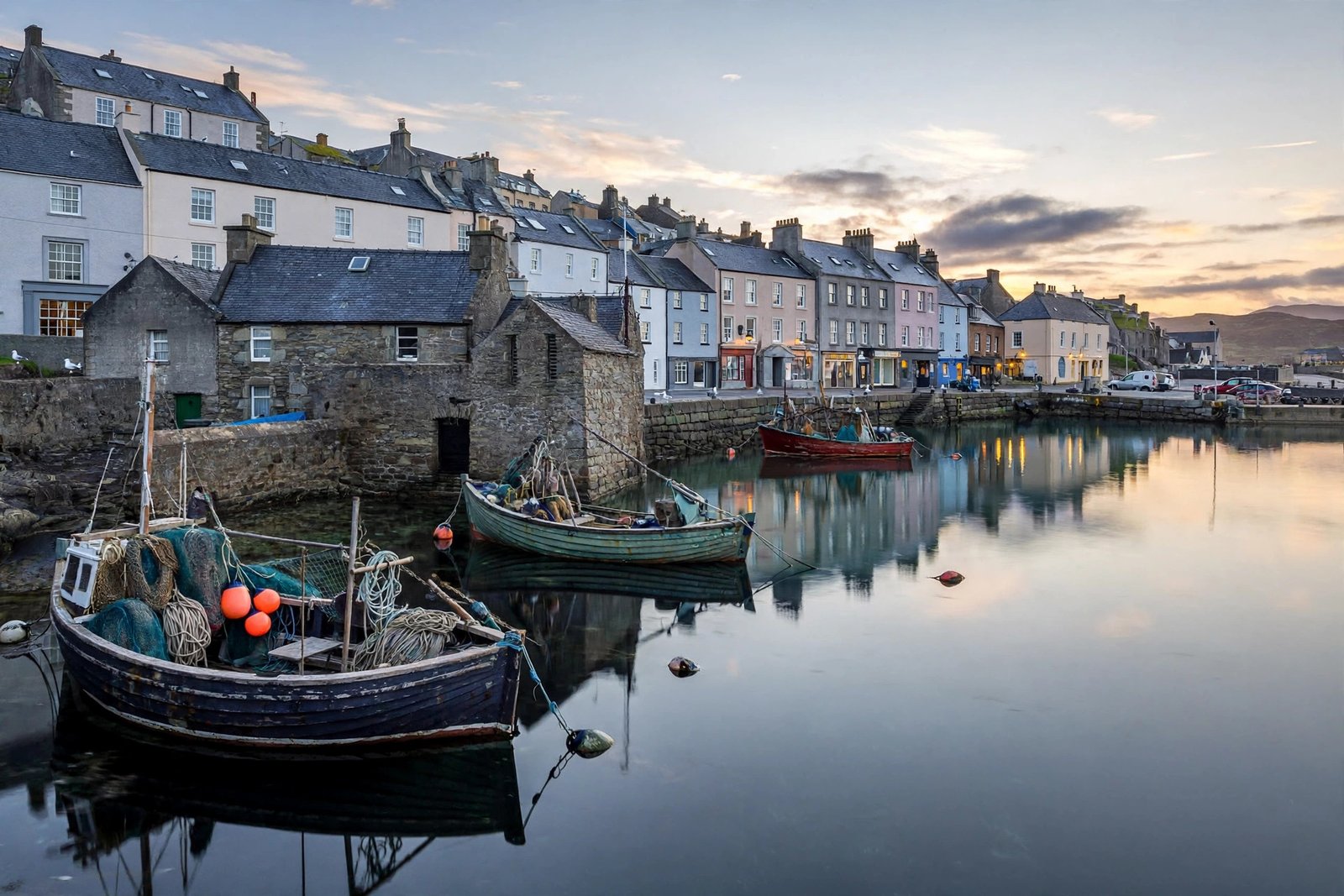
Lerwick is where almost every Shetland food trip begins, and its old town rewards a slow wander. Commercial Street, the flagstoned main street that locals call Da Street, threads along the harbour past independent shops and cafes. Start with coffee and home bakes at the Peerie Shop Cafe, tucked behind the Peerie Shop on the Esplanade, or join the lunchtime crowd at The Dowry, named after the dowry that brought Shetland into Scotland in the fifteenth century, where menus are built around Shetland seafood and lamb.
For a table with a view, Fjara Cafe Bar sits right on the shoreline a short walk from the town centre, serving Shetland mussels and seafood chowder at lunch and local beers in the evening. Lerwick also gives the trail its first producer stop. Lerwick Brewery, based on the edge of town, now carries the title of the most northerly brewery in the British Isles and runs tours and tastings, with shuttle buses from the town centre since summer 2025. The town also has a new whisky distillery, Lerwick Distillery, adding single malt to the islands’ drinks story.
Before you leave the capital, call in at Scoop Wholefoods in the Bolts Shopping Centre. This wholefood shop is a quiet hero of the Shetland food scene, stocking local cheese, eggs, lamb and vegetables alongside beremeal, the traditional barley flour that the islands’ bakers turn into bannocks. It shows how much of the islands’ food still moves from croft and boat to shop shelf within a few miles.
Scalloway and the West
Six miles west of Lerwick, Scalloway was Shetland’s capital until the eighteenth century, and with its ruined castle and busy harbour it still feels like a place apart. It is a natural lunch stop on the way west. Da Haaf, the restaurant attached to the marine campus on the harbour, has long championed Shetland seafood, and the Scalloway Meat Company is the village’s own butcher, a good place to see Shetland lamb and beef prepared by people who know the farms it came from.
Just outside the village, Uradale Farm is one of the most decorated small farms in Scotland. The Eunson family farm organically with native breeds, and their Native Shetland Lamb, beef from the small Shetland kye and traditional products such as reestit mutton and kye sassermaet all feature on the Slow Food Ark of Taste. Farm visits run by appointment, so contact the farm before you travel rather than simply turning up. The west side is also cake fridge country, where roadside fridges sell home bakes, eggs and preserves. Carry cash for the honesty box, and never drive past a full fridge.
Brae and the North Mainland
The road north from Lerwick climbs over open moorland, past the Sullom Voe oil terminal, before dropping into Brae, the largest village in the North Mainland. Brae’s food claim to fame sits on the main road and is impossible to miss. Frankie’s Fish and Chips was established in 2008 and went on to be named the UK’s number one fish and chip shop in 2015, as well as being the most northerly chip shop in Britain. The menu goes well beyond the classic haddock supper, with mussels, scallops, crab and daily specials drawn from local landings, most of it from MSC accredited sustainable stocks.
Eat in the bright cafe with its sea views or take your supper to the shore, but arrive in good time: Frankie’s keeps island hours and the kitchen closes in the early evening. A few minutes away at Busta, the historic Busta House Hotel makes a contrasting stop, a whitewashed country house where the kitchen prides itself on authentic, unfussy Shetland fare cooked to traditional recipes. Between the two, Brae sums up the northern half of the trail: world class seafood served without ceremony, in a working village at the edge of the map.
Unst: The Island of Distilleries and Breweries
Unst is the end of the road in every sense, the most northerly inhabited island in Britain, and it holds the trail’s headline producer. At Saxa Vord, on the site of the former RAF radar station near Haroldswick, the Shetland Distillery Company runs Saxa Vord Distillery, the most northerly distillery in the United Kingdom and the first legal distillery in Shetland. Its Shetland Reel gins have been distilled here since 2014 in a small copper still, and every bottle is filled and labelled on the island.
The signature botanical is apple mint, grown in a polytunnel on Unst and picked for its sweet, soft flavour, alongside the classic gin botanicals. The range now includes expressions inspired by the sea and by island dialect, and guided tours and tastings run in season, but book ahead because groups are small. The same Saxa Vord estate is also home to a cafe and to Foords Chocolates, Britain’s most northerly chocolate producer, so a distillery visit easily becomes an afternoon.
One name from older guidebooks needs a warning. Valhalla Brewery, for years promoted as Britain’s most northerly brewery from its base beside the distillery, has closed, and the most northerly brewery title now sits with Lerwick Brewery back in the capital. Unst still earns its place at the top of the trail, though. Call at Skibhoul Stores in Baltasound for the island bakery’s oatcakes, walk out to the restored Viking longhouse at Haroldswick, and eat your picnic looking north over some of the clearest water in Europe.
Shetland Specialities to Look For
Seafood is the islands’ headline act, and it deserves to be. Shetland’s rope grown mussels, farmed in the clean water of the voes, the sea lochs that cut deep into the islands, are celebrated well beyond Scotland, and local salmon is equally prized. Look for hand dived scallops, crab and haddock. The Taste of Shetland producer group runs a local seafood provenance scheme, and its logo on a menu or a fish counter is a reliable sign that the seafood in front of you was landed and handled in Shetland.
On land, the star is Native Shetland Lamb, a small native breed whose meat carries protected designation of origin status. The sheep graze heather, grasses and seaweed along the shore, and the result is a fine textured meat with an intense, slightly sweet flavour prized by chefs far beyond the islands. Its older relation is reestit mutton, mutton cured in brine and then hung to dry in the rafters of the croft house, traditionally above the peat fire. Reestit mutton is at its best in tattie soup, where a little flavours a whole pot, or sliced cold in a bannock.
Sassermaet is Shetland’s answer to seasoned sausage meat, a peppery minced beef mixture sold by island butchers and best eaten hot in a soft roll, when it becomes one of the great simple lunches of the north. For baking, look for bannocks, the griddle cooked flatbreads that appear at every Shetland table. The most traditional are made with beremeal, flour milled from bere, an ancient six row barley grown in the northern isles for thousands of years. Beremeal bannocks have a soft, savoury crumb and a gentle nutty flavour, and bakeries across the islands make them, including Sandwick Bakery in the South Mainland, which still uses its original recipe.
Where to Buy and Take Home
The best souvenirs from this trail are edible. A bottle of Shetland Reel gin travels well and carries a genuine sense of place, and Lerwick Brewery ales, beremeal, Shetland fudge and island chutneys all survive the journey south. Village shops are the trail’s quiet treasure, stocking local bakery goods, butcher meat, eggs and vegetables, and the Shetland Food Trail created by the islands’ own producers lists dozens of stops, from Lerwick cafes to the shop on Out Skerries, one of Britain’s most remote food shops. The official trail account on the Visit Shetland website is a good way to build your own version of the route.
Fresh seafood and meat need a little thought. Mussels and fish bought on your last day can travel in a cool bag on the overnight ferry, but check your ferry or airline rules for carrying food, and remember that spirits count towards your luggage liquid limits if you fly. If you fall for something you cannot carry, ask the producer about ordering: producers such as Uradale Farm market their meat to customers far beyond the islands, so a taste of Shetland can follow you home.
Practical Tips for a Food Trip
Book ahead, especially in summer. Shetland’s best tables are small, its producers are working businesses rather than visitor attractions, and many cafes keep short or seasonal hours. The same goes for tastings, tours and farm visits, where a call or email a few days ahead can be the difference between a warm welcome and a locked door. Sundays are quiet across the islands, with many shops and some cafes closed, so plan your longest driving day or your ferry home for a Sunday rather than your biggest eating day.
Finally, let the weather set the pace. Ferries to the outer isles can be disrupted in strong winds, and a food trail that depends on one sailing deserves a spare day in hand. Keep a plan B of Lerwick cafes for a stormy day, carry layers even in July, and remember that in midsummer it barely gets dark at this latitude. The simmer dim, Shetland’s name for the summer twilight, is the finest dining room backdrop in Britain. For more island routes in the same series, our Mull and Iona Food Trail pairs seafood with island cheese and crofting on the west coast.
Frequently Asked Questions
When is the best time of year for a Shetland food trip?
Late spring to early autumn is the easiest window, when distillery and brewery tours run in full, cafes keep longer hours and ferries are least likely to be disrupted. Seafood and lamb are available all year, and winter has its own rewards, including Up Helly Aa season in Lerwick and hearty traditional dishes such as reestit mutton soup, but some producers and cafes reduce their hours or close, so check ahead before travelling in the quieter months.
How many days do I need for the Shetland food and drink trail?
Four to five days is a comfortable minimum. That allows a day in Lerwick, a day for Scalloway and the West, a day heading north to Brae, and a full day for Unst, with a spare half day for the South Mainland or a second helping of your favourite stop. A long weekend can cover Lerwick, Scalloway and Brae, but Unst deserves a day of its own rather than a rushed dash.
Can I do the trail without a car?
Parts of it, yes. Lerwick’s cafes, shops, brewery and distillery are all reachable on foot or by local bus and taxi, and buses run north to Brae. The outer islands are harder: reaching Unst without a car means combining buses with the same two ferries, and timetables need care. A guided tour is another option: Taste of Shetland has launched a food and drink tour of the islands, taking in a mussel farm and a chef’s table experience, so check what is running when you visit.
What should I buy to take home from Shetland?
A bottle of Shetland Reel gin is the classic choice, followed by Lerwick Brewery ales, a bag of beremeal for your own bannocks, Shetland fudge and local chutneys. If you have a cool bag and a ferry cabin, fresh Shetland lamb, sassermaet and seafood bought on your final day will travel happily overnight to Aberdeen. Whatever you choose, buy from the producer or a village shop where you can: the money stays remarkably close to the people who made it.
Is Shetland food expensive?
Eating out in Shetland costs roughly what you would expect in rural Scotland, with cafe lunches and fish and chips at everyday prices and hotel dining rooms costing more. The islands’ remoteness can add a little to some menus, but portions are generous and the quality of the seafood and lamb is high for the price. The best value on the trail is often the simplest food: a sassermaet roll from a village butcher, a bannock from a bakery, or a picnic from a cake fridge, eaten looking out to sea.