A first trip abroad after a break of several years, or a first holiday overseas with a wheelchair, a walking aid or a long-term health condition, can feel like a bigger step than it really is. The travelling itself is rarely the hard part. What makes the difference is knowing which rules change when you leave the UK, and sorting the practical details while you are still at home.
This guide covers the abroad side of travelling in later life: choosing a destination that suits your energy and mobility, flying with booked assistance, checking overseas accommodation properly, and getting insurance, healthcare cards and medication organised before you go. If you are also considering a break closer to home, our guide to holidays for elderly travellers with limited mobility in the UK covers the domestic options in the same detail.
What Changes When the Holiday Is Abroad
Some of your rights travel with you, and some do not. On flights departing from the UK or the European Union, Regulation EC 1107/2006 still protects you: airlines and tour operators cannot refuse a booking because of reduced mobility, and airports must provide assistance free of charge. The Foreign, Commonwealth and Development Office (FCDO) sets this out in its guidance on disability and travel abroad, which is worth reading before you book.
Once you arrive, the picture changes. The Equality Act does not apply overseas, and each country sets its own accessibility standards, building rules and attitudes. A hotel that calls itself accessible in one country may simply mean a lift and a handrail in another. Healthcare works differently too: the NHS does not treat you abroad, state systems vary, and you may be asked to pay towards treatment that would be free at home. None of this should put you off. It simply means the checking you do before you pay a deposit matters more than it does for a break in Britain, and our disabled holidays abroad planning guide walks through that research stage step by step.
Choosing Destinations That Suit Older Travellers
Flight time is the first filter. A direct flight of a few hours is far less tiring than a cheaper ticket with a change of planes, a long wait and a second round of boarding. Southern Spain, the Balearics and the Algarve are all within a short flight of most UK airports, and the Canary Islands are a little further but still a single, manageable hop. Direct routes also reduce the chances of assistance bookings or checked mobility equipment going astray.
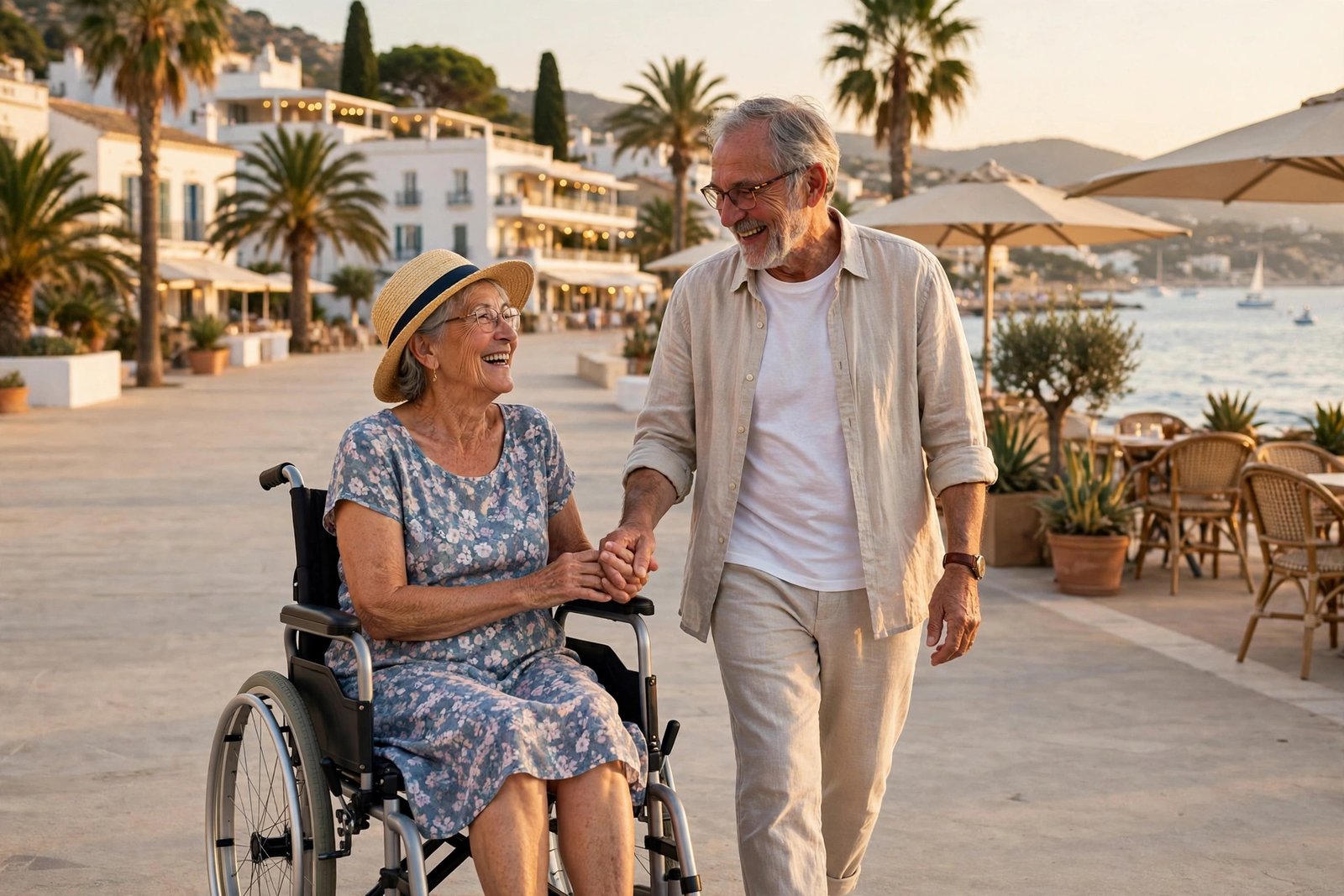
Terrain is the second filter. Resorts built around a level seafront promenade, with hotels, restaurants and the beach all on the flat, are much easier than hill towns and cobbled old quarters. Parts of Tenerife and Lanzarote, much of Malta and many Algarve resorts suit this pattern well. Lisbon, pretty as it is, is famously steep, and the Amalfi Coast and Cinque Terre involve a lot of steps. If a destination is hilly, you can still plan around it with taxis and rest days rather than ruling it out completely.
Finally, think about healthcare and climate. Staying within easy reach of a town with a hospital or clinic brings peace of mind, and it is worth checking how state healthcare works in the country before you go. Strong summer heat can be draining in later life and can interact with some medications, so spring and autumn are often the sweet spot: warm enough for the pool, quieter in the resorts, and gentler for sightseeing.
Flights and Airport Assistance
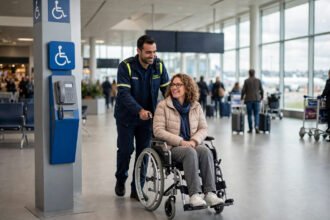
Assistance at the airport is a legal right, not a favour, and it is free. It covers help from arrival points such as the terminal entrance, car park or station, through check-in and security, to the departure gate and onto the aircraft. At the other end, staff should meet the flight and help you through arrivals to your onward transport. Our UK airport assistance guide explains the system in full, from the help points to the codes airlines use for different levels of support.
The Civil Aviation Authority (CAA) advises requesting assistance when you book, or at least 48 hours before departure, through your airline, travel agent or tour operator. Its guide to accessing help and support also recommends asking for written confirmation of the booking and keeping it with your travel documents. Tell the airline in advance if you are taking an electric wheelchair or other mobility equipment, and ask how boarding works at your destination airport, because smaller airports may use steps or a bus rather than an air bridge.
Two limits are worth knowing before you fly. Cabin crew can help you move to the toilet using an onboard wheelchair, but they are not expected to help with eating, drinking, taking medication or using the toilet itself. If you need that kind of help, the airline will expect you to travel with a companion who can provide it. Your own wheelchair will travel in the hold, so remove cushions and anything detachable and take them into the cabin with you.
Checking Accommodation Abroad Before You Book
Never rely on the word accessible in a brochure or on a booking site. The FCDO advises being specific about what you need and getting written confirmation that it will be provided, and that advice is worth following to the letter. Email the hotel directly, even if you booked through an operator, and ask about the details that decide whether a room actually works for you:
- Step-free access from the street to your room, the restaurant, the pool and the beach
- A lift that fits your wheelchair or scooter, or a ground floor room if there is no lift
- A roll-in shower or level-access bathroom, grab rails and space to transfer beside the bed
- The distance from your room to the restaurant and reception, and whether the route is flat
- Airport transfers with a ramp or lift, and how far the drop-off point is from the entrance
Ask about hiring equipment at the destination too. Many resorts have local firms or disability organisations that hire shower chairs, hoists and beach wheelchairs, which can be easier than travelling with everything. If the answers to your questions are vague, choose a different hotel. A property that answers accessibility questions carefully before you book is usually the one that looks after you properly when you arrive.
Travel Insurance and GHIC
For European trips, apply for a UK Global Health Insurance Card (GHIC) well before you travel. The card is free through the NHS GHIC application page, lasts up to five years, and an approved card should arrive within 15 working days. It entitles you to state healthcare that cannot reasonably wait until you return home, on the same basis as a local resident, in European Economic Area countries and a small number of other places. That can still mean paying a share of the cost, because residents in many countries contribute towards their treatment.
The NHS is clear that a GHIC is not a substitute for travel insurance. It does not cover private treatment, being flown back to the UK, or rescue costs, and it offers nothing towards cancellation, lost baggage or a ruined holiday. Buy proper travel insurance as soon as you book, so that cancellation cover starts straight away, and declare every pre-existing medical condition, however minor it seems. An undeclared condition can give an insurer grounds to refuse a claim.
Older travellers sometimes find that mainstream policies become expensive or restrictive with age, and specialist insurers who cover older travellers and declared conditions are worth comparing. Check that the policy covers your mobility equipment, medical repatriation and any activities you plan, and read the FCDO travel advice for your destination before you go, because travelling against official advice can invalidate your cover.
Medication, Documents and Health Prep
Book a GP appointment several weeks before you travel to talk through the trip, any vaccinations the destination calls for, and whether flying is sensible for you at the moment. Some airlines ask for a medical information form for particular conditions, and a short letter from your doctor describing your condition and the help you might need can smooth things over at check-in and security.
Take enough medication for the whole trip, plus a spare supply in case of delays, and keep it in your hand luggage in its original, clearly labelled packaging. The FCDO recommends carrying a letter from your doctor stating your need for the medication, particularly for countries with strict drug controls, because some medicines that are routine in the UK are restricted elsewhere. If you are in any doubt about a medicine, check the rules with the embassy of the country you are visiting before you travel.
Gather the paperwork in one place: passport, GHIC, insurance documents with the emergency number, assistance confirmations, hotel accessibility confirmations and a list of your medication. Keep paper copies and a set on your phone. If you do run into difficulty abroad, the nearest British embassy or consulate can help you contact a local doctor, and within the European Union you can call 112 for the emergency services.
Escorted Tours and Cruises
An escorted tour removes most of the organising. A tour manager travels with the group, hotels and transfers are arranged, luggage is handled, and the pace is usually gentler than on a standard sightseeing tour. Specialist operators who focus on disabled and older travellers often inspect hotels themselves and publish detailed access information, which takes the guesswork out of booking. Before you commit, ask how much walking each day involves, whether the coach has a lift or low steps, how much free time there is, and what happens if you need a rest day.
Cruises suit many older travellers for a simple reason: you unpack once and the destinations come to you. Larger ships have accessible cabins, lifts to every deck and medical facilities on board, and sailings from UK ports remove the flight altogether. Accessible cabins are limited in number, so book early. Check shore excursions carefully, because a port that looks easy on the itinerary may involve tender boats, steep gangways or long walks, and ask what adapted excursions are offered. River cruises need extra checking, as smaller ships may have no lift between decks.
A Simple Planning Timeline
Spread the jobs out and an accessible holiday abroad is very manageable. This order works for most trips:
- Around three months before: choose the destination, see your GP, compare insurance and apply for a GHIC if you need one
- Six to eight weeks before: book flights or the tour, request airport assistance and confirm the hotel details in writing
- Two to four weeks before: order medication, arrange any equipment hire and put your document pack together
- At least 48 hours before: reconfirm your assistance booking with the airline or operator
- On the day: arrive at the airport in good time, with medication and documents in your hand luggage
None of these steps is difficult on its own. Together, they turn a holiday that might have felt daunting into one where the support is booked, the room is confirmed and the paperwork is done, so you can spend the trip enjoying it.
Frequently Asked Questions
Can I fly if I use a wheelchair?
Yes. Airlines cannot refuse your booking because of reduced mobility, and free assistance is available at UK and EU airports. Your wheelchair will travel in the hold, and the airport will provide a chair and staff to help you through the terminal and onto the aircraft. Request assistance when you book, or at least 48 hours before you fly.
Is airport assistance free at airports abroad?
At airports in the UK and the European Union, yes: the cost is covered by the airport, not by you. Further afield the rules vary. Many large airports in the United States and elsewhere offer wheelchair assistance free of charge, but it is not guaranteed everywhere, so check with your airline before you travel.
Does a GHIC mean I do not need travel insurance?
No. A GHIC covers state healthcare on the same terms as a local resident in the countries where it is valid, but it does not cover private treatment, repatriation, cancellation or lost belongings. The NHS advises holding a GHIC and travel insurance together for the whole trip.
Can I take my prescription medication abroad?
Usually, yes. Keep medication in its original packaging in your hand luggage, take enough for the trip plus a spare supply, and carry a letter from your doctor. Some medicines are controlled in other countries even when they are routine here, so check with the embassy of the country you are visiting if your medication might be restricted.
Is an escorted tour a good first trip abroad in later life?
For many people, yes. The operator handles the logistics, assistance and hotel checks are arranged for you, and a tour manager is on hand if anything goes wrong. Ask detailed questions about walking distances, coach access and the daily pace before you book, and choose a specialist operator if you need a higher level of support.