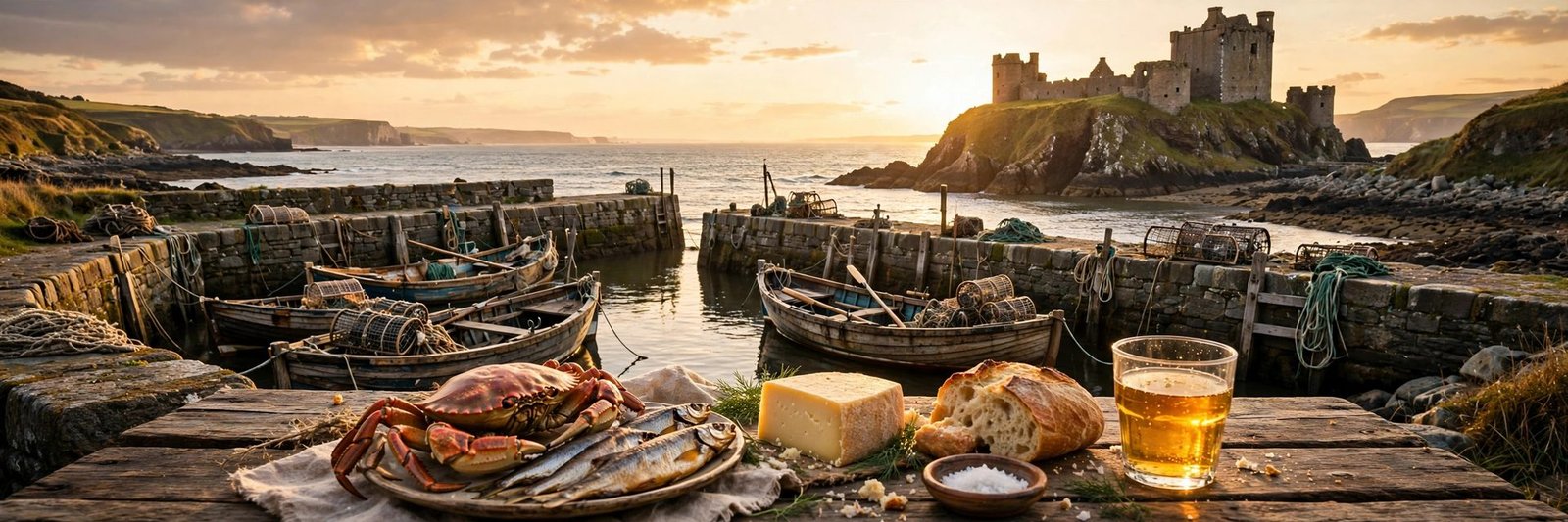
Northumberland is England’s most northerly county, and its food tastes of the place it comes from. Along a coast of fishing villages and castles, and inland across moorland and farmland, small producers, smokehouses, farm shops and family-run kitchens have fed travellers for generations. This trail pulls the best of it into one route you can drive over a few days.
In 2026 Visit Northumberland launched Taste of Northumberland, a quality mark for local food and drink, with three self-guided trails that anyone can follow. Each trail has five stops, and you can drive one trail in a day or join all three into a longer trip. This guide covers the three trails, the classic tastes to try, and the farm shops worth building into your route.
What the Northumberland Food and Drink Trail Is
The Northumberland food and drink trail is not one fixed path. It is a set of routes that link the county’s best food and drink stops, from harbour-side seafood restaurants to country inns and working mills. The three official Taste Trails give the route its shape, while the older food stops, such as the Craster smokehouse and the farm shops, fill in the gaps.
What makes the county different is how close the food stays to where it is made. The coast gives crab, lobster and smoked herring, inland farms give hill lamb, beef and game, and market towns such as Alnwick and Wooler hold the restaurants and delis that turn that produce into a meal.
The Three Official Taste Trails at a Glance
The official trails sit on the Taste of Northumberland website, where each one is laid out as a self-guided drive with five stops. All three are free to follow, with no guide and no timetable, so take them in any order.
| Trail | Where it goes | Stops include |
|---|---|---|
| Catch of the Coast | The coast road, from Bamburgh to Chathill | The Potted Lobster, The Buoy Inn, The Whittling House, Jasper’s Bistro, The Tempus |
| Tea in the Town | Market towns across the county | The Courtyard, Motte & Bailey, Ad Gefrin, The Blackbird |
| Wild Eats | Country lanes and moorland | Heatherslaw Corn Mill, The Highlander, Restaurant Pine, The Bosk, Fells Kitchen |
Pick one trail for a day trip, or base yourself in Alnwick or on the coast and work through all three over a long weekend.
Catch of the Coast: The Seafood Route
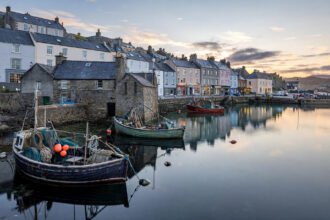
Catch of the Coast follows the coast road through five fishing villages and small harbours, and every stop makes the most of the catch landed just beyond its door. In Bamburgh, The Potted Lobster serves crab and lobster below the castle. In Seahouses, The Buoy Inn sits on the harbour where the day boats come in. Alnmouth has The Whittling House, Amble has Jasper’s Bistro, and The Tempus at Chathill closes the route inland from the shore.
Build in a detour to Craster, a few miles south of Alnwick, for the county’s most famous food. Craster kippers are herring split, brined and smoked in the village smokehouse, and they have been made the same way for more than a century. The smokehouse at L Robson & Sons was built in the 1850s, the Robson family bought it in 1906, and four generations later Neil Robson still runs it, smoking herring from Norway for around 16 hours over oak sawdust and whitewood shavings. The building is now Grade II listed, and Historic England’s listing records it as a rare survival of the north east’s herring industry.
Seahouses and Amble are working fishing harbours, so the crab and lobster on the menu have not travelled far. Look for the fish shacks and the fish and chip shops along the harbour fronts, then walk the beach at Bamburgh or Beadnell while the tide is out.
Tea in the Town: Market Towns and Proper Dinners
Tea in the Town runs through the county’s market towns. In this part of the world, “tea” means dinner, and the trail takes in The Courtyard in Pegswood, the Motte & Bailey Restaurant at the Bailiffgate Hotel in Alnwick, and The Blackbird in Ponteland.
The stop that makes this trail special is Ad Gefrin in Wooler, an Anglo-Saxon museum and whisky distillery that opened on 25 March 2023. It is named after a seventh-century royal palace at Yeavering, near Yeavering Bell, and it is the first legal whisky distillery in Northumberland in 200 years. The museum tells the story of the Anglo-Saxon kings of Northumbria, and the distillery makes English single malt from Northumbrian barley. You can read more on the Ad Gefrin Distillery page before you go, and book a museum ticket with a distillery tour and tasting if you want the full visit.
Alnwick is the best base for this trail, a proper market town with a castle and a garden worth a morning, and delis, bakeries and cafes around the market place. Wooler sits on the edge of the Cheviot Hills, so pair Ad Gefrin with a walk up to the border country and come back hungry.
Wild Eats: The Countryside Route
Wild Eats heads inland, across the county’s rural heartland. At Ford and Etal, Heatherslaw Corn Mill has been milling flour on the banks of the River Till for hundreds of years, and you can watch the mill work and buy flour ground on the day. Between Ponteland and Belsay, The Highlander is a heritage coaching inn from the 1700s, with a gastropub menu that suits families and slow lunches.
The fine dining stop is Restaurant Pine at East Wallhouses, near Corbridge. It holds a Michelin star and serves tasting menus built around the region’s produce, so book ahead. In the Breamish Valley at Powburn, The Bosk suits a meal or an overnight stay. For something different, Fells Kitchen pairs guided walks in the Northumberland countryside with restaurant-quality food cooked outdoors by mountain leader and chef Chris Reay.
Give this trail a full day. The lanes are narrow and the villages are small, which is half the point, but it means you should not try to pack it in after a morning on the coast.
Northumberland Foods You Have to Try
A few tastes define Northumberland. Lindisfarne Mead is made at St Aidan’s Winery on Holy Island, where monks are believed to have made mead since the seventh-century monastery was founded. The modern drink was revived in the 1960s by J. Michael Hackett, and it blends honey with fermented grape juice, herbs and water from the island’s own well, then fortifies the mix with spirit. The winery showroom offers tastings, and a bottle makes the easiest souvenir in the county.
Holy Island is a tidal island, cut off twice a day when the tide covers the causeway, so check the safe crossing times before you drive over. The priory, the castle and the mead together make one of the best half days in the county.
Look out for stotties, the flat, soft bread rolls that are a north east staple, and singin’ hinnies, flat griddle scones that get their name from the sound they make as they cook. Doddington Dairy makes cheeses with local names such as Cuddy’s Cave, Berwick Edge and Admiral Collingwood, alongside its ice cream. The hill lamb from the Cheviot and Ingram valleys and the game in season are the inland answer to the coast’s seafood.
Farm Shops, Markets and Producers Worth a Stop
The farm shops are the easiest way to take the trail home with you. Sunnyhills Farm Shop at Belford, just off the A1, sells Northumbrian lamb, beef and pork from its butchery, home-made pies, sausage rolls and Scotch eggs, and a deli counter that stocks Doddington cheeses. It is a natural stop on the way to Seahouses, Bamburgh and Holy Island.
Chain Bridge Honey Farm near Berwick sells honey from its own hives, and the Great Northumberland Bread Company at Etal bakes artisan bread close to Heatherslaw Corn Mill, so the two pair well on the same morning. Doddington Dairy sells its cheese and ice cream direct, and asparagus, strawberries, real ale, mead and rum all turn up at farm shops and delis through the year. Leave room in the car for a bottle of mead and a wedge of cheese.
How to Plan Your Northumberland Food and Drink Trail
A car is the practical way to do this trail. Buses link the main towns, but the villages, farm shops and country inns are spread out, and a car lets you follow the coast road and the inland lanes at your own pace. Base yourself in Alnwick for the market towns and the coast, or on the coast if the seafood route is your priority, and give each trail a day of its own.
Book ahead for the restaurants on the trails, and well ahead for tasting menus and weekend evenings, as the best places are small. Check the Holy Island tide times before you cross to Lindisfarne, and check opening days for the smaller producers, as country kitchens and farm shops do not all open every day.
If you enjoy this kind of route, the same idea works further north. Our Isle of Skye food and drink trail follows the same pattern around a Scottish island, and the Arran food and drink trail does the same for the island the Scots call Scotland in miniature.
Frequently Asked Questions
How long does the Northumberland food and drink trail take?
Allow one day for each of the three official trails, so three days for the full set. A long weekend covers the trails with time for Bamburgh Castle, Alnwick and Holy Island, while a week adds Hadrian’s Wall and the Cheviot Hills.
When is the best time to visit Northumberland for food?
Late spring to early autumn gives you the widest choice, with asparagus in late spring, strawberries in summer, and the seafood shacks at their busiest. Autumn brings game and quieter roads.
Do I need a car for the Northumberland food and drink trail?
Yes, in practice. The stops sit in fishing villages, market towns and country lanes that are hard to join up by bus, and a car gives you room for what you buy at the farm shops and the smokehouse.
The Bottom Line
The trail works because the county does not have to pretend. The kippers come from a smokehouse that has worked since the 1850s, the mead comes from a tidal island with a seventh-century monastery, and the restaurants cook what the boats and farms bring in that day. Follow one trail or all three, book the tables that matter, and leave room for the farm shops. If you want another island route after this one, our Shetland food and drink trail takes the same idea even further north.