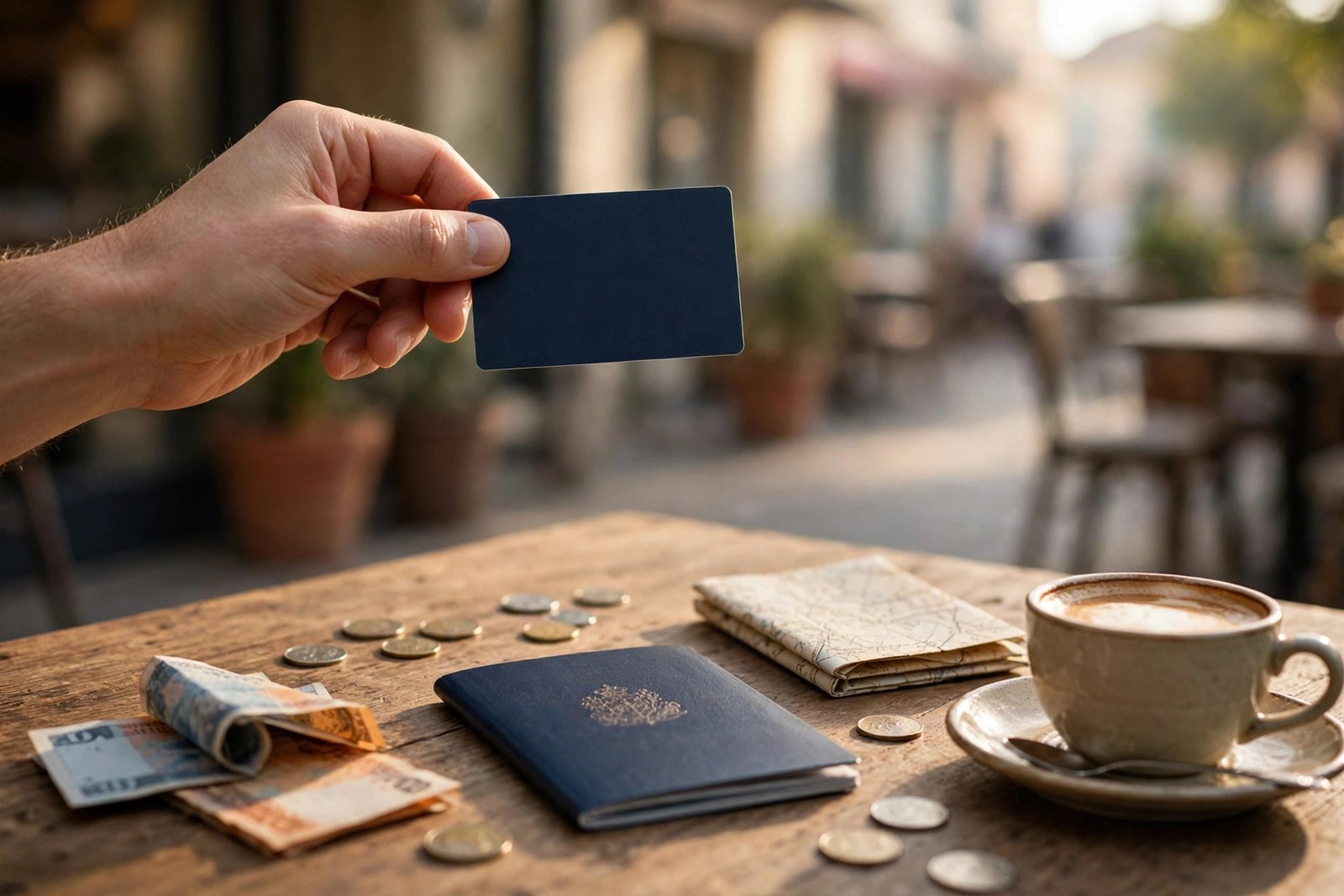
A coffee in Lisbon, a taxi in Marrakech, a train ticket in Tokyo. Every payment abroad is a small exchange-rate decision, and the wrong choice quietly takes a few pounds each time. Over a two-week trip, those few pounds add up to a meal out, or a day trip you did not take.
The Short Answer: A Fee-Free Card, Plus a Little Cash
For most trips, the cheapest setup is simple. Take one fee-free debit card for everyday spending and cash withdrawals, a credit card with no foreign transaction fees as a backup and for larger purchases, and a small amount of local cash for the first day or two. Keep the two cards in separate places, so losing one does not leave you with nothing.
Why Your Everyday Bank Card Costs You Money
Most standard UK debit and credit cards charge a foreign transaction fee on every purchase abroad, typically around 2.99%. Many add a separate fee for cash withdrawals, and some build a margin into the exchange rate itself, so the rate you get is worse than the rate quoted online.
On a £1,000 holiday spend, a 2.99% fee alone is nearly £30. Add ATM fees and a poor exchange rate, and the same trip can cost £50 or more extra, before you have bought anything. Check your own bank before you travel: look for the foreign transaction fee, the cash withdrawal fee abroad, and whether the bank adds a margin to the exchange rate. If all three apply, a travel card will pay for itself on the first trip.
Fee-Free Travel Cards: The Cheapest Way to Pay Abroad
A small group of UK cards charges no foreign transaction fee and converts spending at the Mastercard or Visa exchange rate, which sits very close to the interbank rate. These are the cards to compare first. Terms change, so check the current limits before you rely on any figure below, and compare the latest options in a guide such as the Money Saving Advice travel money guide.
| Card | Foreign transaction fee | Free ATM withdrawals abroad |
|---|---|---|
| Starling Bank debit | None | Free up to £300 a day |
| Chase UK debit | None | Free up to £1,500 a month |
| Monzo debit | None | Free up to £200 every 30 days, then 3% |
| Wise debit | None | Free up to £200 a month |
| Halifax Clarity credit | None | No fee; interest from day one on cash |
Starling and Chase suit travellers who take out cash often, because their free ATM allowances are the most generous. Monzo and Wise suit card-first travellers who only need the odd cash withdrawal. Halifax Clarity works well for spending, but never use it for cash: interest starts the day you withdraw. Apply in good time, and test the card with a small purchase at home before you fly.
Credit Cards Abroad: Handy, With One Rule
A credit card with no foreign transaction fees is worth carrying for two reasons. First, it is a backup if your debit card is lost or blocked. Second, purchases between £100 and £30,000 are protected under Section 75 of the Consumer Credit Act, which makes the card issuer jointly liable if something goes wrong with what you bought, such as a hotel that never delivers the room, or a tour operator that goes bust. That protection applies abroad just as it does at home.
The rule is to pay the balance in full each month. Interest on overseas spending can wipe out every saving the fee-free rate gave you. And never withdraw cash on a credit card unless you have no other choice: interest usually starts from the day of the withdrawal, at a higher rate than purchases, with no interest-free period on cash.
Cards and cash cover spending. They do not cover medical bills or a cancelled trip. That is what travel insurance and a GHIC are for, and our guide to GHIC vs travel insurance explains what each one actually covers.
Prepaid Travel Cards: Lock In a Rate Before You Go
A prepaid travel card, also called a currency card, is loaded with money before you travel. Some let you load a foreign currency, which locks in the exchange rate at the point you top up, so the rate cannot move against you while you are away. You can only spend what you loaded, so there is no risk of running up debt, and most can be frozen in an app if the card is lost.
Compare the full fee list before choosing one. Some charge to load sterling, some charge an inactivity fee of around £2 a month if the card sits unused for a year, and some add a markup on currencies they do not directly support. The Post Office Travel Money Card, Caxton and Asda Money cards are among the widely available options, and Which? compares prepaid travel cards and their fees in detail.
A prepaid card suits travellers who want a fixed budget and a fixed rate, such as a family trip where each person carries their own loaded card. For most other trips, a fee-free debit card does the same job with less admin.
Cash: How Much to Take and Where to Get It
Cards work almost everywhere in Europe now, but cash still matters. Street food stalls, small family restaurants, rural taxis, tips, markets and some public transport systems are cash-only in many places, including parts of southern and eastern Europe, South-East Asia, Africa and Latin America. Arrive with enough local cash for the first day or two: transport from the airport, a first meal, and small purchases until you find an ATM.
If you want cash before you go, compare rates online and order ahead. The Post Office, Sainsbury’s Bank and specialist providers such as No1 Currency are usually among the better rates, and comparison tools such as TravelMoneyMax show the best rate on the day. Airport bureaux de change are consistently the most expensive option, with rates often 5% to 10% below the interbank rate. The gap between the best and worst way to change £500 can be £30 to £60.
Some currencies cannot be bought usefully in the UK at all. The Moroccan dirham, Tunisian dinar and Algerian dinar are closed currencies, so withdraw cash from an ATM when you arrive, and keep the exchange receipts if you want to change money back at the end of the trip.
Work out how much cash you will actually need before you order any. Our Amalfi Coast trip cost breakdown shows what a week really costs from the UK: daily food and transport, plus a small cash float for the places that do not take cards.
Always Pay in the Local Currency
At a card machine or an ATM abroad, you will often be asked whether to pay in pounds or in the local currency. Always choose the local currency. Choosing pounds hands the conversion to the shop or the ATM operator, in a practice called dynamic currency conversion, and the rate they give you is almost always worse than your card network rate, often by 5% or more on a single payment. If a machine has already converted the amount before asking, cancel and start again.
Using ATMs Abroad
Use ATMs attached to a bank, or inside a bank branch, rather than standalone machines in tourist areas. Bank ATMs use the network exchange rate and rarely add an operator fee. Standalone machines, such as the bright blue Euronet machines found across Europe and Asia, often push dynamic currency conversion and charge an operator fee.
Taking Cash Out of the UK: The £10,000 Rule
There is no limit on how much cash you can take out of the UK. There is a declaration rule. If you are carrying £10,000 or more between Great Britain and a country outside the UK, you must declare it to UK customs. The same applies to a family or group carrying £10,000 or more in total, even if each person is carrying less than that. For Northern Ireland, the threshold is €10,000. Declare online before you travel, or at customs when you arrive, and no earlier than 72 hours before you travel. If you do not declare cash that you should have, a Border Force officer can seize all the cash you are carrying, and you may have to pay a penalty of up to £5,000 to get it back. Full details are on the GOV.UK cash declaration page.
If a Card Is Lost, Stolen or Blocked
Two cards from different networks, kept in separate places, is the best insurance against a lost wallet. Add a second layer: keep a small emergency cash reserve somewhere other than your wallet, such as a money belt or a hotel safe, and save your card numbers and your bank’s overseas helpline in your phone, so you can freeze a card and order a replacement without the card in your hand.
Most travel cards can be frozen instantly in the app. Do that first, then call the bank. If a card is blocked rather than lost, it is often a fraud check triggered by unusual spending, and a quick call usually clears it.
If cash or cards are stolen, report it to the local police and keep the report number. Some travel insurance policies cover stolen cash up to a limit, so check what yours says before you travel. Our guide to what travel insurance actually covers explains the cash and belongings limits to look for.
Frequently Asked Questions
Is it better to take cash or cards abroad?
Take both. A fee-free card covers hotels, restaurants and larger purchases at a good rate, and a small amount of cash covers taxis, tips, markets and anywhere that does not take cards. Carry at least two cards, kept apart, so one loss does not strand you.
What is dynamic currency conversion?
It is when a shop or ATM offers to convert your payment into pounds for you, instead of charging you in the local currency. The rate is set by the shop or ATM operator, not your card network, and it is almost always worse. Always choose the local currency.
Do I need to tell my bank I am travelling?
Most modern banks and travel cards do not need advance notice. They track your phone location and recognise the trip. If your bank still asks for travel notifications, set one in the app before you go.
The Bottom Line
Travel money comes down to three habits: a fee-free card for spending, a little local cash for the places cards do not reach, and always paying in the local currency. Sort the card a week or two before you travel, order any cash online rather than at the airport, and keep a second card somewhere separate.